Cosmetic Technology
Fermentation Technology in Cosmetics: From Raw Material to Formula
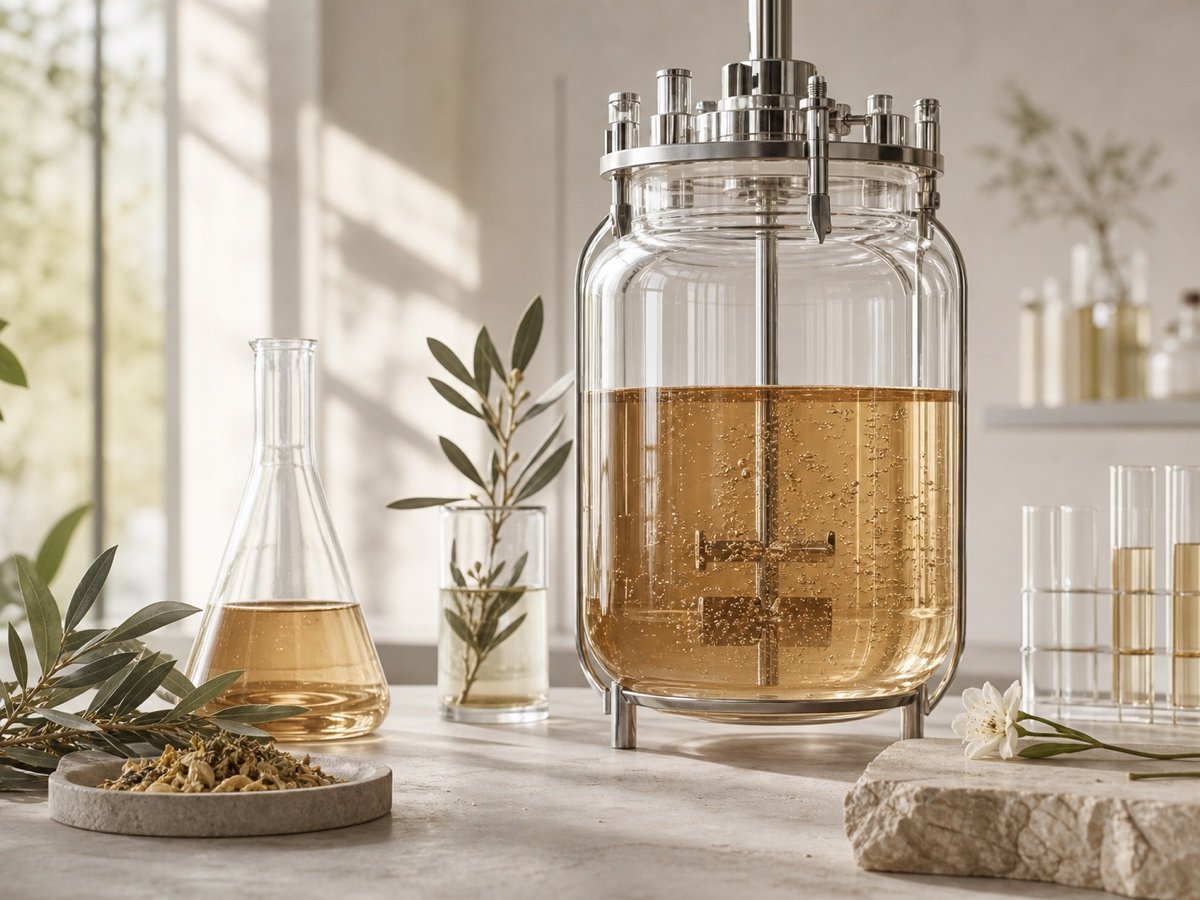
See how controlled fermentation transforms cosmetic ingredients and what standardization, safety and formulation compatibility require.
Cosmetic fermentation uses selected microorganisms or enzymes to transform a substrate under controlled conditions. The output does not have to contain live microorganisms; it may be a ferment filtrate, lysate, extract, postbiotic ingredient or purified metabolite.
Fermentation can break larger compounds into smaller structures, generate new metabolites or change solubility and sensory properties. Organic acids, amino acids, polysaccharides, enzymes and biosurfactants are among the materials considered in cosmetic development. A fermented origin alone does not prove superior performance or universal suitability.
Quality depends on the strain, substrate, temperature, pH, oxygen, process time and harvest point. Filtration, inactivation, purification and standardization after fermentation define the final ingredient. Supplier documentation should cover microbiological purity, unwanted metabolites, specifications and batch consistency.
Ferments may add color, odor, electrolytes or nutrients to a formula, so preservation, pH, viscosity, packaging and stability must be checked again in the finished product. Clear communication should distinguish fermented ingredients from probiotics and microbiome claims unless the product-specific evidence supports those terms.