Cosmetic Technology
How Liposomal Technology Works in Cosmetic Formulas
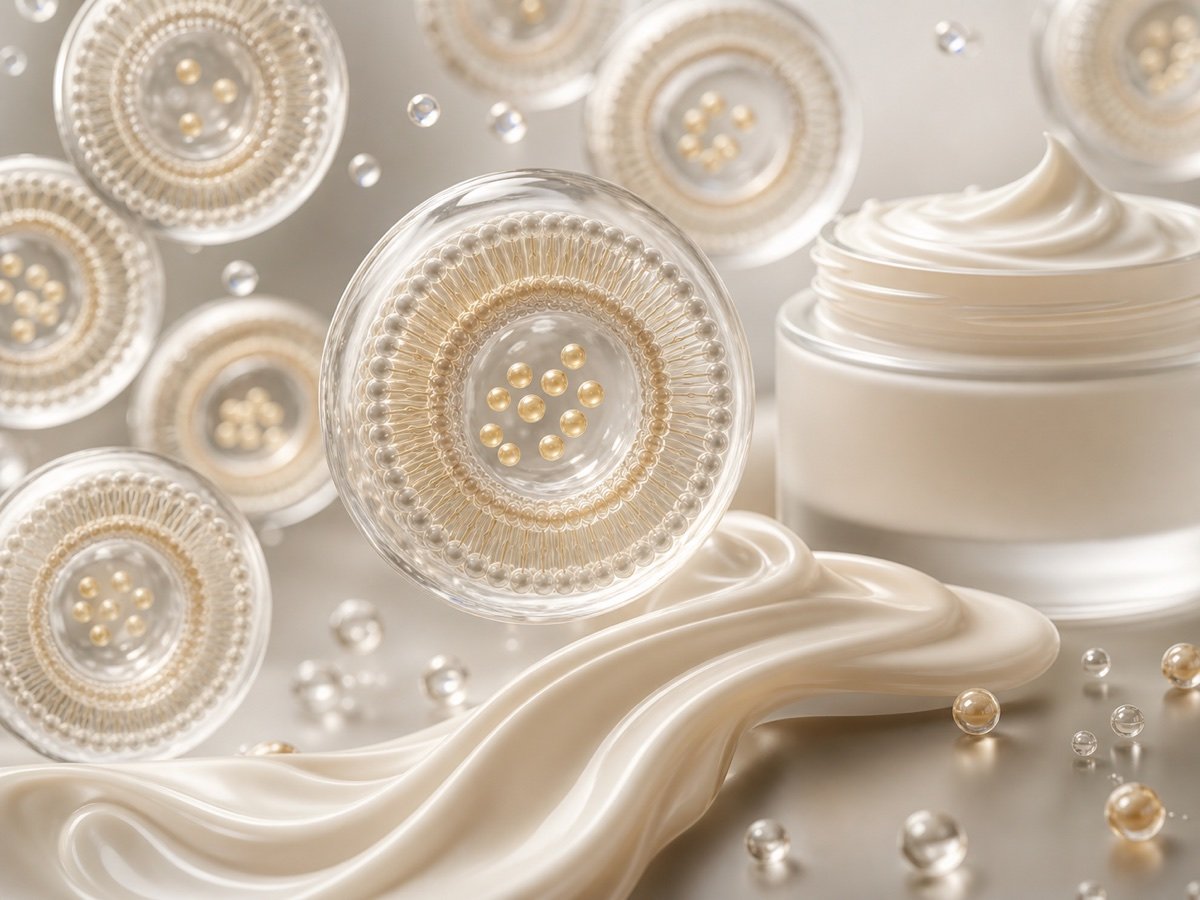
Learn how liposomes encapsulate cosmetic ingredients and which stability, packaging and performance checks matter in finished products.
Liposomes are spherical vesicles formed when phospholipids organize in water. Their aqueous core and lipid bilayer can accommodate certain water-soluble and oil-soluble ingredients, making them useful carriers in cosmetic formulation.
A liposomal system may improve dispersion, protect a sensitive ingredient or support local release. It does not automatically prove deeper penetration or greater efficacy. Performance depends on vesicle size, phospholipid composition, surface properties, active loading and the conditions in the finished product.
Development should measure encapsulation, particle-size distribution, leakage or aggregation over time and retention of the active ingredient. pH, salts, surfactants, preservatives, heat, light and oxygen can affect vesicle stability, so packaging and shelf-life testing are part of the technology rather than an afterthought.
The final formula needs compatibility, microbiological safety and appropriate performance testing. Claims about delivery, persistence or efficacy should reflect evidence from the actual product, not only the supplier brochure for the liposomal raw material.